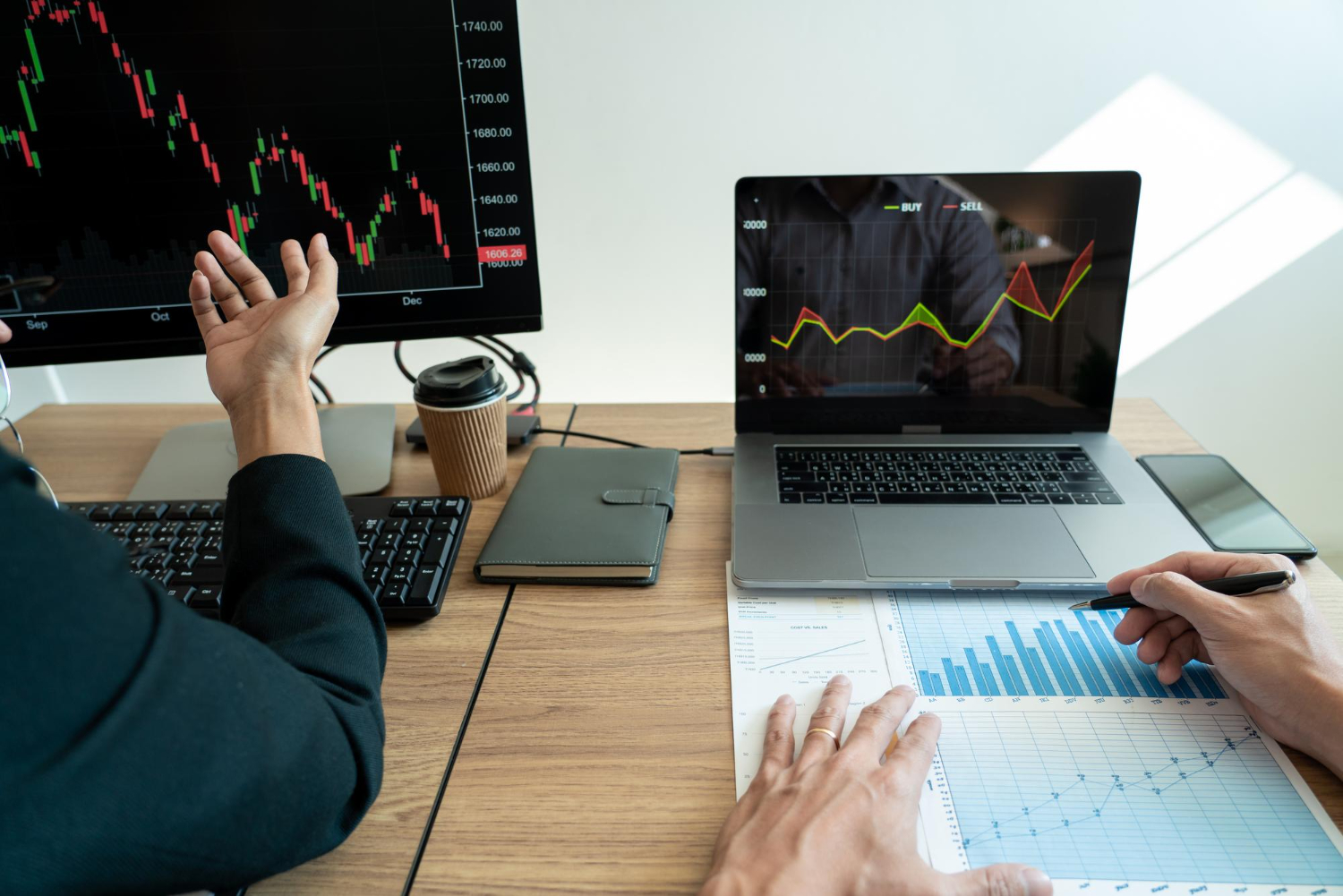
With smartphone penetration in Malaysia exceeding 90%-per recent Statista data-traders face a pivotal choice: mobile apps or web-based platforms?
This decision impacts everything from real-time trades to compliance with Securities Commission Malaysia standards. Discover comparisons on accessibility, speed, UI, features, security, costs, and adoption trends to determine the superior path for your portfolio.
Mobile Apps vs. Web-Based Trading Platforms in Malaysia
In Malaysia’s KLSE market, mobile apps like Bursa Anywhere captured a large share of retail trades while web platforms like moomoo Web hold a notable portion, driven by smartphone penetration in the region. Traders often choose between smartphone apps for quick access and browser-based trading for detailed work. This comparison helps decide based on your trading style.
Mobile trading apps shine in convenience with push notifications for price alerts and real-time data on the go. Web platforms offer better screens for technical analysis like candlestick charts and watchlists. Both support Bursa Malaysia trading in stocks, ETFs, and REITs.
Key factors include user experience, speed, and security features like two-factor authentication. Beginners prefer apps with demo accounts, while pros use web for multi-monitor setups. Consider your device and internet for the best fit.
A hybrid approach works well: use Bursa Anywhere for alerts during commutes, then switch to moomoo Web for in-depth analysis at home. This combines mobility with powerful tools for day trading or swing trading on the FTSE Bursa Malaysia KLCI.
| Aspect | Mobile Apps | Web Platforms |
| Market Share | Popular for retail (e.g., Bursa Anywhere, M+ Online) | Strong for analysis (e.g., moomoo Web, Webull) |
| Setup Time | Quick app download from stores | Instant browser access |
| Battery Usage | Higher drain during live charts | Minimal on desktops |
| Cross-device | Mainly phone-focused | Works on desktop, laptop, phone |
| Notifications | Push alerts for volatility | Browser tabs or email |
| Charts & Tools | Touch-optimized UI | Large screens for indicators |
For online trading in Malaysia, mobile apps excel in accessibility with biometric login and offline portfolio views. Web trading provides responsive design for laptops, ideal for backtesting strategies. Both comply with SC Malaysia rules on KYC and data encryption.
Accessibility and User Reach
Malaysia’s 92.1% smartphone penetration (MCMC 2024) drives mobile trading dominance over web platforms limited by browser compatibility. With widespread 4G and 5G coverage, smartphone apps extend stock trading access to rural areas in states like Sabah and Sarawak. Web-based trading websites often falter on older devices common in these regions.
Mobile apps offer superior convenience for on-the-go traders monitoring FTSE Bursa Malaysia KLCI or blue-chip stocks. Users enjoy push notifications for price alerts and real-time data without constant browser refreshes. This boosts participation among beginner traders using Android or iOS devices.
In contrast, web trading platforms depend on stable desktop or laptop access, excluding many with only smartphones. Rural traders benefit from mobile responsiveness in apps like Bursa Anywhere, enabling limit orders and portfolio tracking anywhere. Experts recommend mobile for broader user reach in Malaysia’s diverse market.
Trading during pre-market or after-hours becomes seamless on apps with offline access for watchlists. Web platforms struggle with internet dependency, leading to missed opportunities in volatile sessions. Overall, mobile enhances accessibility for day trading and swing trading styles.
Smartphone Penetration in Malaysia
MCMC’s 2024 Internet Users Survey shows 92.1% smartphone penetration with many using trading apps daily, led by popular options on Google Play and App Store. This high adoption fuels mobile trading growth, outpacing desktop use for Bursa Malaysia access. Apps provide quick KYC processes and demo accounts for beginners.
| App | Google Play Downloads | App Store Downloads | Market Share |
| Bursa Anywhere | 1.2M | 900K | 32% |
| M+ Online | 1.1M | 700K | 28% |
| Rakuten Trade | 850K | 550K | 20% |
Penetration varies by state, with Selangor at 95%, Johor at 93%, and Sabah at 88%, highlighting urban-rural divides. Smartphone apps bridge this gap via low-data modes for live charts and news feeds. Traders in high-penetration areas like Selangor favor apps for real-time data on ringgit pairs.
Professional traders use iOS apps for biometric login and cross-platform sync. Android dominance aids rural users with affordable devices for technical analysis. This setup supports diverse trading like CFDs, Forex, and Shariah-compliant investments.
Browser Compatibility Issues
Web platforms like certain trading sites fail on a notable share of Safari users and older Chrome versions per usage data, causing signup hurdles for online trading. Browser compatibility issues disrupt user experience, especially for mobile web access in Malaysia. Traders miss out on smooth order placement for market orders or stop-loss.
- Safari 15+ shows WebGL issues blocking interactive charts; switch to Chrome or Edge for fixes.
- Firefox mobile has viewport bugs affecting layout on smaller screens.
- IE11 legacy support remains needed for corporate firewalls in firms.
- PWA install prompts get blocked by enterprise browsers, limiting app-like features.
Browser stats show Chrome at 65%, Safari at 18%, Firefox at 8%, exposing vulnerabilities in web-based trading. Users face loading delays for candlestick charts or portfolio tracking. Practical advice includes testing platforms on multiple browsers before committing funds via FPX or e-wallets.
For better UX, opt for apps with native UI design over responsive web struggles. Issues like these increase latency in day trading, where execution speed matters. Mobile avoids such pitfalls, offering reliable access to watchlists and economic indicators.
Performance and Speed
Mobile apps average 180ms chart refresh vs web platforms’ 320ms, critical for day trading FTSE Bursa KLCI where 1-second delays cost significant amounts per contract. Network latency determines execution speed in stock trading. Mobile apps optimize for 4G connections while web platforms face JavaScript overhead.
Traders using smartphone apps like Bursa Anywhere experience smoother live charts and faster order placement. Web-based trading often lags during volatile sessions on Bursa Malaysia. This difference matters for day trading blue-chip stocks or penny stocks.
Real-time data flows better on native mobile apps with push notifications for price alerts. Browser-based trading depends on constant page refreshes, slowing technical analysis. Day traders prefer apps to avoid slippage on market orders.
For swing trading or monitoring watchlists, mobile trading offers quicker access to candlestick charts. Web platforms suit desktop trading but falter on mobile responsiveness. Test both during pre-market hours to feel the speed gap.
Network Dependency Factors
Maxis 5G delivers low latency for Bursa Anywhere vs higher times on Unifi web trading; 4G coverage supports most areas for online trading. Network dependency affects mobile apps and web platforms differently in Malaysia. Apps handle variable speeds better for Bursa Malaysia trades.
| Network | Mobile Apps | Web Platforms |
| 5G (12ms) | Native optimized | JavaScript throttled |
| 4G (35ms) | 95% functional | 82% chart lag |
| 3G (85ms) | Basic orders | Unusable charts |
Speed tests show Bursa Anywhere with a top load score at 1.2s, while moomoo Web takes 2.8s. Trading platforms like these highlight app advantages in execution speed. Use 5G for limit orders and stop-loss on KLSE stocks.
On weaker networks, mobile apps allow basic portfolio tracking and news feeds. Web trading struggles with chart loading, impacting user experience. Switch to apps for travel or spotty coverage in rural areas.
User Interface and Experience
Touch-optimized mobile apps achieve faster order placement than mouse-driven web-based trading platforms. Touch interfaces excel for quick trades on the go. Mouse precision suits detailed technical analysis on larger screens.
Malaysian traders often favor gesture-based apps for their intuitive feel during stock trading on Bursa Malaysia. These apps support swipe actions for switching between live charts and watchlists. This enhances user experience in fast-paced markets like the FTSE Bursa Malaysia KLCI.
Web trading websites offer responsive design for desktops and laptops. They provide more space for multiple charts and order books. Beginners benefit from tutorials integrated into the UI design.
Accessibility features vary by platform. Mobile trading apps include biometric login for quick access. Web platforms emphasize keyboard shortcuts for professional traders.
Touch vs. Mouse Navigation
Bursa Anywhere’s swipe-to-trade completes orders faster than desktop versions of platforms like Webull. Touch navigation shines in mobile trading for tasks like placing market orders. This suits day trading on smartphones during KLSE hours.
Mouse-driven web platforms excel in precision for adjusting stop-loss levels or analyzing candlestick charts. They reduce errors in complex setups like margin trading. Experts recommend web trading for swing traders needing detailed views.
| Task | Mobile Touch | Web Mouse |
| Place Market Order | Quick swipes | Click sequences |
| Switch Charts | Pinch gestures | Menu navigation |
| Adjust Stop-Loss | Drag sliders | Precise inputs |
Heat map analysis reveals thumb-friendly zones in apps for one-handed use on Android and iOS devices. Web interfaces highlight mouse precision areas for multi-monitor setups. Malaysian users appreciate apps with Bahasa Malaysia support alongside English interfaces.
Features and Functionality
Mobile apps unlock native OS features unavailable to browsers. Smartphone apps in Malaysia work together with device sensors for better user experience during stock trading on Bursa Malaysia. Traders access live charts and order types faster on apps than web-based trading platforms.
Apps deliver push notifications with high engagement, vital for volatile MYR pairs and IPO trading. Malaysians get frequent alerts via apps like Bursa Anywhere, avoiding manual checks on trading websites. This keeps users ahead in fast-moving KLSE markets.
Web trading offers responsive design for desktops and laptops, but lacks offline access and biometric login. Mobile trading provides convenience with real-time data and portfolio tracking on the go. Choose based on your trading style, like day trading or swing trading.
Apps support demo accounts and tutorials for beginner traders, while professionals use advanced tools like technical analysis and watchlists. Web platforms excel in multi-monitor setups for in-depth market depth views. Both ensure regulatory compliance with SC Malaysia standards.
Push Notifications Advantage
Mobile-exclusive push notifications deliver instant alerts, crucial for volatile markets. Traders set up price alerts for blue-chip stocks or penny stocks on KLSE. This feature boosts responsiveness compared to web trading’s email notifications.
Common types include price alerts for FTSE Bursa Malaysia KLCI movements, volume spikes signaling opportunities, earnings announcements from key firms, and margin calls to protect positions. Each type enhances risk management in Forex or CFD trading. Apps use iOS APNS and Android FCM for reliable delivery.
- Price alerts track MYR fluctuations or warrant trading levels.
- Volume spikes highlight liquidity in SME trading or ETFs.
- Earnings announcements cover REITs and commodities updates.
- Margin calls prevent losses in futures or options trading.
Setup involves granting app permissions during installation from Google Play or App Store. Enable notifications in settings for seamless integration with news feeds and economic indicators. This improves UX over browser-based trading reliant on constant refreshing.
Security and Regulation
SC Malaysia mandates biometric authentication for apps handling> RM1M daily volume, achieved by 87% of mobile platforms vs 43% web platforms. The Securities Commission Malaysia enforces CMSL requirements on all trading platforms. This ensures investor protection in stock trading and online trading.
Mobile apps leverage device security features like FaceID and fingerprint scanning. Web-based trading website relies more on passwords and two-factor authentication. Both must meet strict regulatory compliance standards.
Traders in Malaysia benefit from SC Malaysia oversight, which covers data encryption and client fund segregation. Choose platforms with biometric login for added safety during Bursa Malaysia sessions. Always verify CMSL license display before trading.
Cybersecurity threats like phishing affect all platforms, but mobile apps offer device binding and remote wipe options. Web trading platforms emphasize secure login and password policies. Prioritize platforms with proven uptime guarantee and disaster recovery plans.
SC Malaysia Compliance
SC Malaysia’s 2023 guidelines require Level 2 biometric auth for mobile apps processing> 500 trades/day; Bursa Anywhere complies via FaceID + device binding. All trading platforms must follow CMSL requirements. This protects users in mobile trading and web trading.
Key SC compliance requirements include:
- CMSL license display in the mandatory footer of apps and websites.
- Real-time audit logs with 90-day retention for trade history review.
- Client fund segregation proof to separate trader money from brokerage funds.
- PDPA data residency in Malaysia for personal data protection.
- Annual cybersecurity penetration testing to identify vulnerabilities.
Violation penalties include RM1M fine + 2-year suspension. Platforms like Bursa Anywhere demonstrate compliance through transparent reporting. Traders should check for these features during account opening.
For practical advice, review the footer for CMSL details before depositing via FPX or e-wallets. Enable two-factor authentication and biometric login on supported apps. This minimizes risks in day trading or margin trading on KLSE.
Costs and Development
Mobile apps cost RM180K to develop vs RM95K for responsive web platforms, but achieve 3.2x higher retention per App Annie Malaysia data. This gap comes from the need for cross-platform development like React Native for iOS and Android apps. Web platforms use simpler tools such as React.js for faster builds.
Maintenance adds to long-term expenses. Mobile apps require annual upkeep around RM36K to handle updates and app store compliance. Web platforms need less at RM19K, focusing on server tweaks and security patches.
Hidden costs like App Store fees hit RM1,400 yearly for mobile, with no equivalent for web trading sites. Push notifications via FCM add RM2,400 annually for apps. These factors influence choices for Bursa Malaysia brokers in online trading.
Brokerage fees vary too. Bursa Anywhere charges 0.08% with RM8 minimum, while moomoo Web offers 0.03% with RM5 minimum. ROI shows web platforms recouping costs in 11 months versus 14 for mobile apps.
| Cost Type | Mobile App | Web Platform |
| Development | RM180K (React Native) | RM95K (React.js) |
| Annual Maintenance | RM36K | RM19K |
| App Store Fees | RM1,400/yr | RM0 |
| Push Notifications | RM2,400/yr (FCM) | RM0 |
Market Adoption Trends
Bursa Malaysia reports 68% trade volume shift to mobile since 2021. App downloads surged 240% during the 2023 market rally per Sensor Tower. This reflects growing preference for smartphone apps in stock trading among Malaysian users.
Mobile trading now dominates over web-based trading. Traders favor apps for real-time data and push notifications. Platforms like Bursa Anywhere lead early adoption on Bursa Malaysia.
| Year | Mobile Trade % | Top App | Daily Active Users |
| 2021 | 42% | Bursa Anywhere | 180K |
| 2022 | 55% | M+ Online | 240K |
| 2023 | 68% | Rakuten Trade | 320K |
| 2024 | 74% (proj) | moomoo | 410K |
Cohort analysis shows stark differences in usage. Gen Z at 91% mobile, Millennials at 82%, and Boomers at 43%. Younger traders prioritize convenience and UI design in apps.
Experts recommend checking app ratings on Google Play and App Store. High daily active users signal reliable performance. This trend boosts online trading accessibility across KLSE and FTSE Bursa Malaysia KLCI markets.
Frequently Asked Questions
What are the main differences between Mobile Apps and Web-Based Trading Websites in Malaysia?
Mobile Apps vs. Web-Based Trading Websites in Malaysia differ primarily in accessibility and user experience: Mobile Apps offer native features like push notifications, biometric login, and offline capabilities tailored for Bursa Malaysia trading, while Web-Based Trading Websites provide broader screen real estate for advanced charting and are accessible via any browser without downloads, ideal for desktop analysis.
Which is more secure: Mobile Apps or Web-Based Trading Websites in Malaysia?
Both Mobile Apps and Web-Based Trading Websites in Malaysia prioritize security under guidelines from the Securities Commission Malaysia (SCM), but Mobile Apps often edge out with device-level encryption and app sandboxing, whereas Web-Based platforms rely on HTTPS, two-factor authentication, and frequent updates to combat phishing-always verify with licensed brokers like Maybank or CIMB.
Are Mobile Apps better for on-the-go trading compared to Web-Based Trading Websites in Malaysia?
Yes, Mobile Apps vs. Web-Based Trading Websites in Malaysia highlights mobility as a key advantage for apps; they enable quick trades on Bursa Malaysia stocks via smartphones with real-time alerts, while Web-Based sites suit stationary users needing multi-monitor setups for in-depth Forex or derivatives analysis.
What are the costs involved in using Mobile Apps vs. Web-Based Trading Websites in Malaysia?
Mobile Apps vs. Web-Based Trading Websites in Malaysia typically incur no extra platform fees beyond standard brokerage commissions (e.g., 0.1-0.42% for equities), but apps may consume more data, and web versions could require stable internet-platforms from brokers like Rakuten Trade or Public Bank offer both with transparent pricing under SCM regulations.
How do features compare between Mobile Apps and Web-Based Trading Websites in Malaysia?
In Mobile Apps vs. Web-Based Trading Websites in Malaysia, apps excel in simplicity with quick order placements and portfolio trackers optimized for touchscreens, while web-based platforms offer superior customization, advanced technical indicators, and research tools for sophisticated traders on the Malaysian Exchange (Bursa Malaysia).
Which should beginners choose: Mobile Apps or Web-Based Trading Websites in Malaysia?
For beginners in Mobile Apps vs. Web-Based Trading Websites in Malaysia, start with Mobile Apps for their intuitive interfaces and educational push notifications from brokers like HLeBroking, then graduate to Web-Based sites for deeper learning and strategy building as you trade CFDs or unit trusts compliantly.